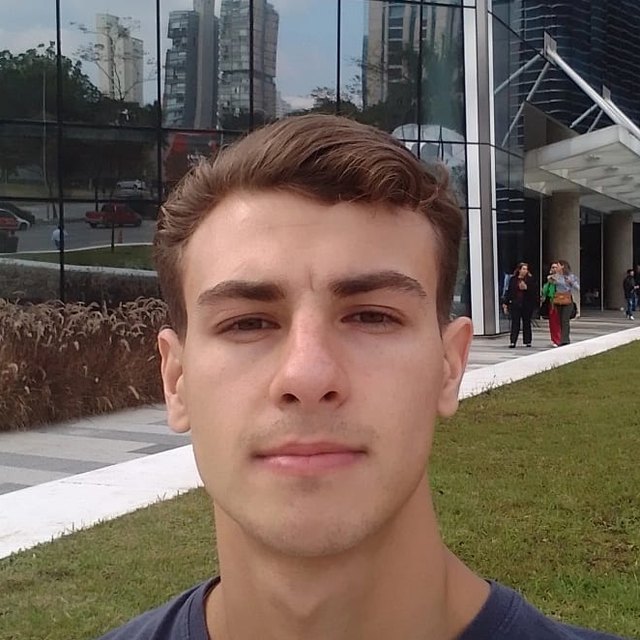
Your models.
Your hardware.
Your endpoint.

A deep learning engineer for teams that need one without a full-time hire. I take open-weight vision models from raw data to a production endpoint on infrastructure you control — then keep them running. Your data stays inside, and the weights stay yours.

Book a call See the work 30 minutes, no slides.
Gabriel Cicotoste

Trusted by teams at

GE21 Geotecnologias OmniHunter ObotX MyArchitectAI North of Zero Kexxu Robotics

Your data leaves the building

Every request ships your images and documents to someone else's servers, under someone else's terms.

The bill grows with success

Per-token pricing punishes you for using the product more. Self-hosted inference costs what the hardware costs.

The model is not yours

You cannot fine-tune it, pin a version, or take it with you when the vendor changes the pricing.

The whole life cycle, or the part of it you are missing. Each one of these already shipped for someone — the work below is the proof.

01

Training

The model that fits your data, not a generic one. Pretraining from your raw images when labels are scarce, finetuning open weights with LoRA and QLoRA when they exist, and the benchmark that says it beat what you had.

Shipped: Privhti EO satellite segmentation · DINOv3 multi-spectral · Qwen3-VL finetuning

See the training work
02

Serving

The model behind a URL your code can call. An OpenAI-compatible endpoint on your own hardware, vLLM picked automatically on NVIDIA GPUs, and streaming that keeps long video and heavy scenes inside a real memory budget.

Shipped: SursumAI · Tesla BEV Cam · cloudpurge · Digital Twinning

See SursumAI
03

Pipeline

The product around the endpoint. Ingestion, batching, storage and the application logic that turns a model call into something your users actually press a button for.

Shipped: KlipMind · client pipelines in production

See the pipelines
01

Scope

Your data, your hardware, your latency budget and what can never leave your network.

02

Adapt

The right model picked and trained on your data, then measured against your baseline.

03

Ship

Live behind an endpoint you control, on your machines, with code and weights handed over.

Not an agency and not a hire: someone who works inside your stack for as long as you need deep learning done, and steps back when you don't. Three ways in.

Audit

A short, fixed start — before anyone commits to anything bigger.

You get

  • A benchmark report with open-weight candidates scored on your own data
  • Latency, VRAM and cost projected for the hardware you already have
  • A go or no-go answer with the shortlist worth starting from
Start with a call

Build

One defined thing, taken from raw data to production and handed over.

You get

  • The trained model and its weights yours to keep
  • A running endpoint on your infrastructure, OpenAI-compatible
  • Training and serving code in a repo you own
  • A runbook and a handover with the people who will run it
Start with a call

Why not a full-time hire?

Most teams need deep learning in bursts: a model to get working, then months of it just running.

  • You pay for the months the work is there, and pause the ones it isn't
  • No recruiting cycle, no onboarding, no headcount to justify
  • Everything built stays yours: code, weights and the runbook behind them

AI Startups

Teams that need a vision model working now, without building an ML department first.

Sensitive Data

Where the data cannot leave the building, and an external API is not an option.

Geospatial & EO

Multi-spectral segmentation, cloud removal and land-cover analysis at scale.

Robotics & 3D

Bird's-eye-view perception, real-time depth and reconstruction from video.

SursumAI: Self-Hosting Models

Your model. Your machine. Your URL. Deploy open-weight and custom models on your own hardware and get an OpenAI-compatible endpoint. No terminal, Docker, or GPU knowledge needed. Picks vLLM automatically on NVIDIA GPUs.

Self-Hosting vLLM Model Serving
Visit sursumai.com

DA3-Streaming: Depth in Real Time

Streaming pipeline that lets Depth Anything 3 run on long video sequences and large-scale scenes under tight CPU/GPU memory budgets, chunking frames and carrying state across chunks for stable online inference.

Depth Estimation Streaming Inference Memory Efficiency
View on GitHub

Digital Twinning: Images to Mesh

Two 3D reconstruction pipelines compared on the same multi-view capture: SAM3 segmentation feeding COLMAP sparse and dense MVS, against 3D Gaussian Splatting converted to mesh with SuGaR. Both end in textured geometry.

3D Reconstruction SAM3 + COLMAP Gaussian Splatting
View on GitHub
cloudpurge: Clouds Out of Planet Imagery

cloudpurge: Clouds Out of Planet Imagery

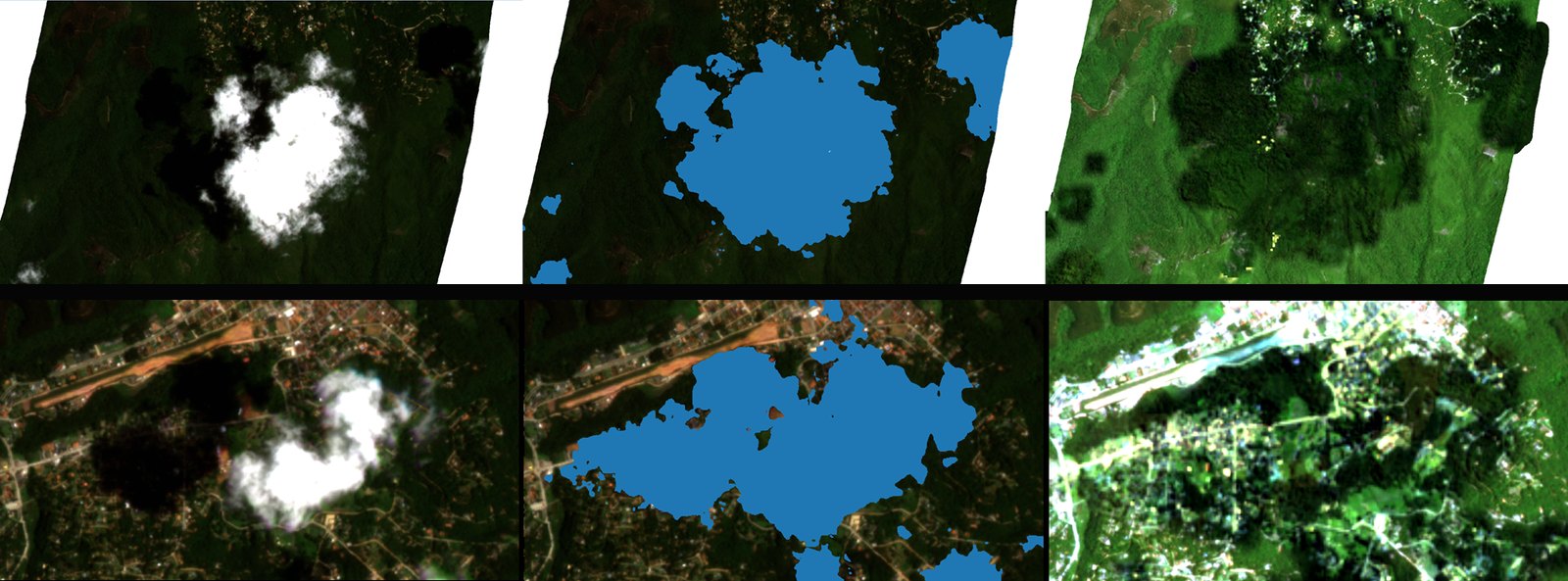
Stacks cloudy Planet imagery over clean Sentinel-2 of the same place. Detects the clouds, opens a hole through them and the surrounding haze, matches brightness by histogram, and composites with a feathered edge so the seam disappears.

Remote Sensing Cloud Masking CLI
View on GitHub

Tesla BEV Cam Clone

Bird's-eye-view perception system replicating Tesla FSD's surround-camera fusion pipeline for real-time vehicle and lane reconstruction.

BEV Perception Camera Fusion PyTorch
View on GitHub
Metric 3D built from Depth Anything, with 3D vehicle detection.
Satellite multi-spectral segmentation

Privhti EO: Satellite Segmentation

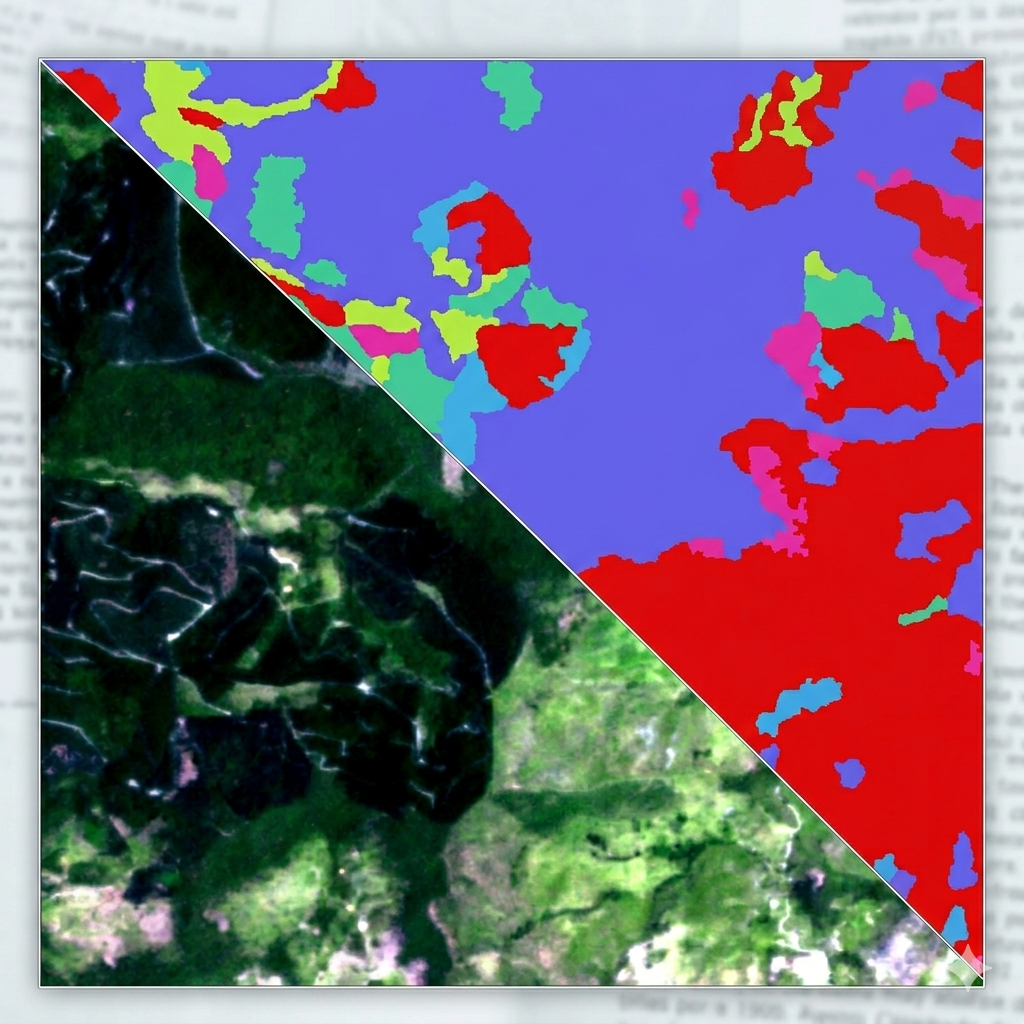
Multi-spectral semantic segmentation of satellite imagery for Earth Observation, built for Privhti EO's geospatial intelligence platform.

Remote Sensing Multi-Spectral Segmentation
View on GitHub

KlipMind

Local video summarizer that runs entirely on-device. No data leaves your machine. Extracts key moments and generates structured summaries from any video file.

On-Device AI LLM Video Understanding
View on GitHub
DINOv3 multi-spectral similarity maps

DINOv3 Multi-Spectral Similarity Maps

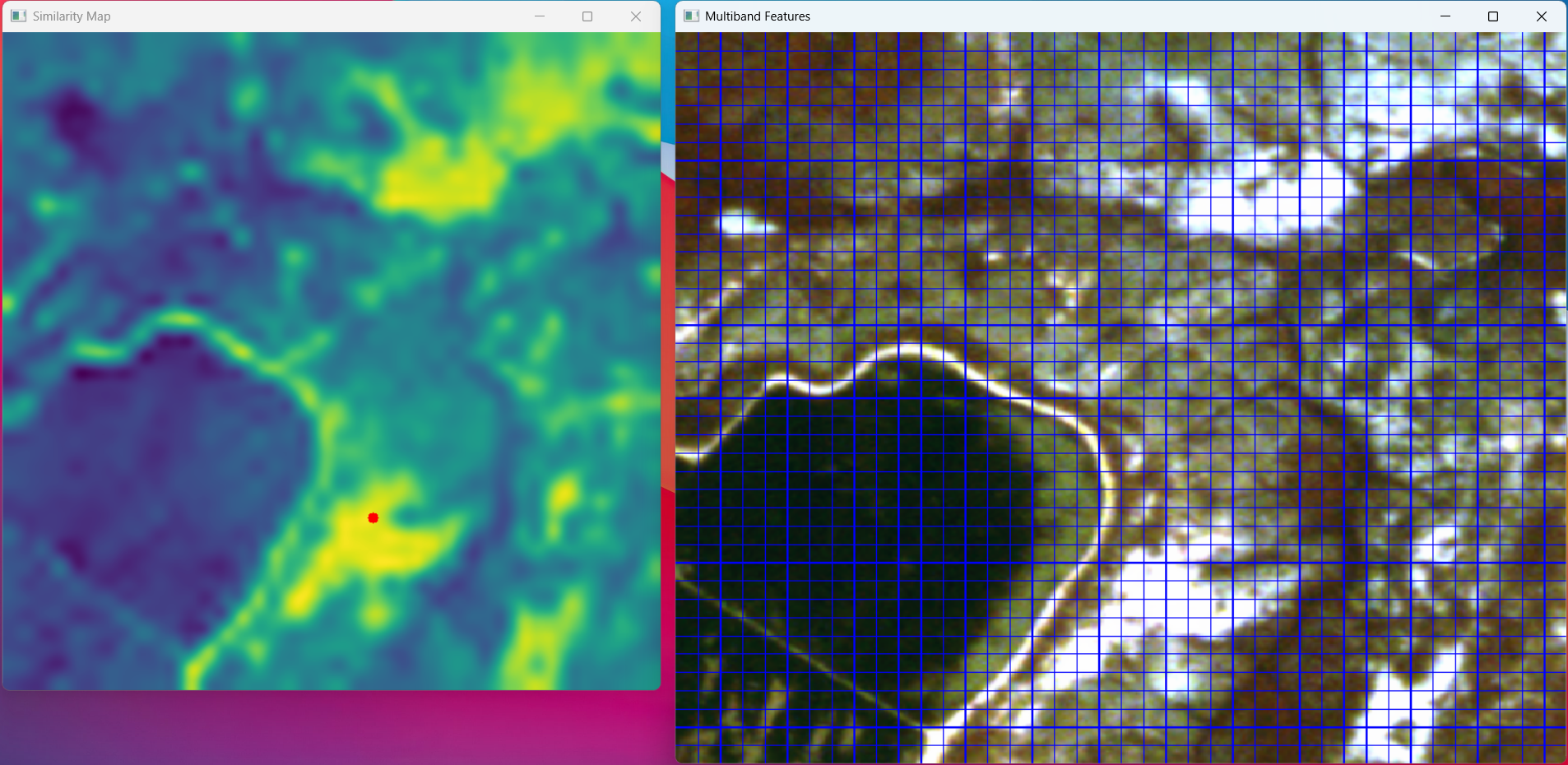
Adapting DINOv3 self-supervised features to multi-spectral imagery for dense similarity mapping, enabling zero-shot land-cover analysis without labeled data.

Self-Supervised DINOv3 Similarity Maps
View on GitHub
Qwen3-VL LoRA fine-tuning terminal

Qwen3-VL Fine-tuning

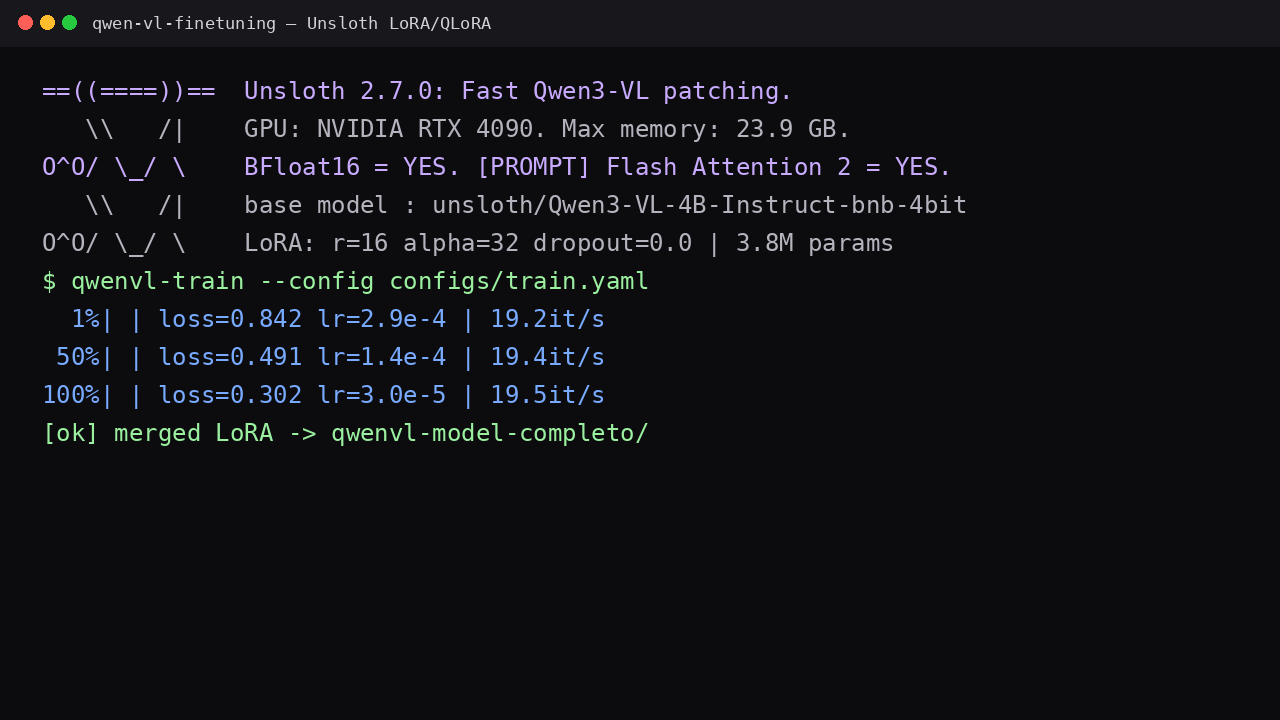
CLI for fine-tuning and fast inference of Qwen3-VL with LoRA/QLoRA, adapting open-weight vision-language models to domain data with minimal VRAM.

LoRA/QLoRA Qwen3-VL Fine-tuning
View on GitHub
Gabriel Cicotoste

Gabriel Cicotoste

Deep Learning Engineer | Pretraining, Finetuning, Inference & Serving Vision Models

Brasil · 4,590 followers

Do I need my own GPU?

No. Smaller models run on CPU through llama-server. If you have an NVIDIA GPU, SursumAI picks vLLM automatically for far higher throughput.

Does my data leave my infrastructure?

No. Training and inference run on your machines. I work inside your environment and nothing is uploaded to a third party.

Who owns the code and the weights?

You do. Everything built in the engagement is handed over at the end, including training code, serving code and model weights.

How do open weights compare to a closed API?

If a closed API covers your case and the data is not sensitive, use it. Open weights win when data cannot leave, when usage is heavy enough that per-token pricing hurts, or when you need to fine-tune and own the model.

Which models do you work with?

Vision and multimodal models: Qwen-VL, DINOv3, Depth Anything, SAM, Prithvi, YOLO, and whatever fits the problem.

Do you work full-time or by project?

Neither, usually. Most of the work is part-time and ongoing — I act as the deep learning engineer your team doesn't have on payroll, by the month. If you'd rather scope a single build and take it from there, that works too.

How do we start?

Book a 30 minute call. We go through your data, hardware and constraints, and I tell you whether open weights make sense for your case.

Have a model that should be in production by now?